Monad Protocol Architecture and Technical Development Status
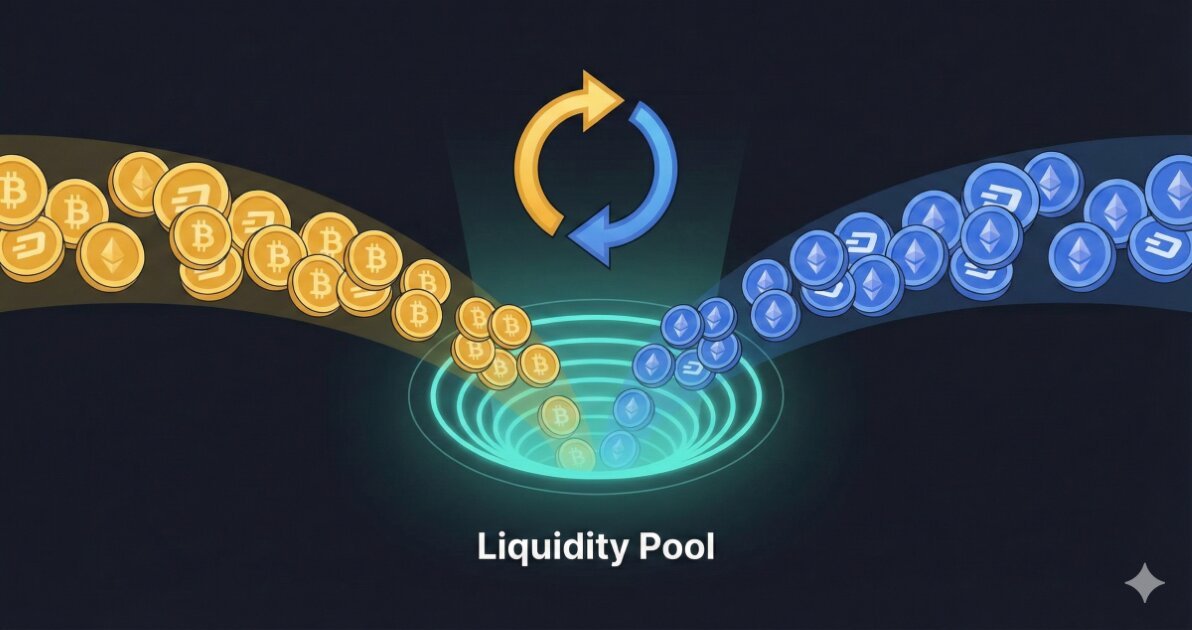
Monad is a Layer 1 EVM blockchain protocol designed to execute Ethereum transactions at significantly higher throughput through parallel execution, deferred state commitment, and a custom consensus mechanism. For developers and operators considering deployment or integration, understanding Monad’s architectural differences from standard EVM chains determines compatibility, migration effort, and risk exposure.
This article breaks down Monad’s core technical components, examines the trade-offs introduced by its execution model, and outlines what to verify before committing resources to the network.
Parallel Execution Model
Monad processes transactions in parallel rather than serially, using optimistic execution with conflict detection. The system speculatively executes multiple transactions simultaneously, then validates dependencies after execution. When the execution engine detects conflicting state access between two transactions (for example, both modifying the same storage slot), it re-executes the dependent transaction with corrected state.
The parallel execution model benefits workloads where transaction sets exhibit low dependency overlap. DEX trades touching different liquidity pools or NFT mints writing to separate contract storage gain the most. Dense transaction graphs with high contention (many users competing for the same state, like a popular liquidity pool during volatile periods) force more re-executions, reducing realized throughput below the theoretical maximum.
Monad claims the execution layer can process 10,000 transactions per second. Actual sustained throughput depends on workload characteristics. Networks with similar architectures have demonstrated that real world mixed workloads typically achieve 40 to 60 percent of peak throughput due to conflict rates and block propagation overhead.
State Management and MonadDB
Monad separates execution from state commitment. Transactions execute against a projected state, and the database commits finalized state asynchronously after consensus confirms the block. This deferred commitment model reduces latency in the critical path but introduces complexity in state queries and reorg handling.
MonadDB, the custom state database, uses a structure optimized for the read and write patterns generated by parallel execution. The database maintains multiple state versions simultaneously to support speculative execution branches. Nodes query specific state roots when validating historical transactions or serving RPC requests for past blocks.
Developers building applications that rely on immediate state consistency (such as price oracles reading multiple contracts atomically within a single block) need to verify how Monad resolves read ordering when parallel transactions modify shared state. The protocol documentation should specify whether reads within a block see a consistent snapshot or reflect partial execution order.
Consensus: MonadBFT
Monad implements MonadBFT, a variant of HotStuff BFT consensus optimized for single slot finality. The protocol aims to finalize blocks in one second, compared to Ethereum’s 12 second slot time and roughly 15 minute finality under ideal conditions.
Single slot finality eliminates the probabilistic security model of longest chain consensus. Validators sign blocks, and once a supermajority signs, the block becomes irreversible. This removes reorg risk beyond the finality threshold but concentrates liveness risk in the validator set. If more than one third of validators by stake go offline or refuse to participate, the chain halts until the threshold recovers.
For applications, single slot finality allows cross contract logic and bridge operations to rely on shorter confirmation windows. However, operators must monitor validator set health more closely than on probabilistic finality chains, where temporary validator dropouts cause slowdowns but not full stops.
EVM Compatibility and Bytecode Execution
Monad maintains EVM bytecode compatibility, meaning contracts compiled for Ethereum should deploy without modification. The execution environment interprets standard opcodes, maintains the same gas cost schedule, and preserves contract call semantics.
Compatibility breaks can occur in areas where parallel execution changes observable behavior. For example, if two transactions in the same block both call the same contract and read its state, the order in which they observe state updates may differ from serial execution on Ethereum. Contracts that depend on strict intra-block ordering (rare but present in certain MEV strategies or tightly coupled DeFi protocols) may produce different results.
Developers should test contracts that use block.number or block.timestamp for critical logic, as these values might behave differently when execution happens speculatively and out of order. The protocol must define how these global variables resolve when parallel transactions query them simultaneously.
Network Maturity and Deployment Status
As of this writing, Monad has not launched its mainnet. The project ran a devnet phase and announced testnet milestones, but no public mainnet exists. This status means all technical specifications remain subject to change, and no production transaction data exists to validate throughput claims or measure real world conflict rates.
Projects evaluating Monad should treat all performance figures as design targets rather than observed metrics. The transition from testnet to mainnet often reveals issues in validator coordination, state growth, and network propagation that affect realized performance.
Developers interested in early deployment can participate in testnet phases to identify integration issues and contribute to tooling development. Testnet participation also provides data on how specific contract patterns perform under parallel execution, which informs optimization strategies.
Validator and Node Requirements
Monad’s architecture imposes higher hardware requirements than standard EVM chains due to parallel execution overhead and state database complexity. Validator nodes need more CPU cores to benefit from parallel processing, more memory to maintain multiple state versions, and faster storage to handle deferred state commitment writes.
Specific hardware requirements should be confirmed in the official node operator documentation, as these specifications typically evolve through testnet phases. Early estimates suggest validators may need 16 or more CPU cores, 64 GB of RAM, and NVMe storage with high IOPS. These requirements affect decentralization, as higher barriers limit the validator pool.
Node operators should also verify network bandwidth requirements, as higher transaction throughput increases block size and state delta transmission between peers.
Worked Example: Parallel DEX Trade Execution
Consider a block containing 100 transactions, 60 of which are swaps across three different DEX protocols, and 40 are NFT mints writing to separate collections.
The execution engine begins processing all 100 transactions in parallel across available CPU cores. Each transaction reads contract code, executes bytecode, and provisionally writes state changes to temporary storage.
During execution, the conflict detector identifies that 12 of the DEX swaps touch the same liquidity pool (writing to the same storage slots for reserves and price updates). These transactions conflict and must be ordered. The execution engine picks one transaction as correct, invalidates the other 11, and re-executes them serially using the updated state from each preceding transaction.
The NFT mints and remaining DEX swaps (touching different pools) complete in parallel without conflicts. The block finalizes once all conflicts resolve and consensus confirms.
Total execution time depends on conflict depth. If the 12 conflicting transactions complete in roughly 12 serial steps (each updating state the next depends on), and each step takes 1 millisecond, the conflict resolution adds 12 milliseconds. The parallel work finishes in roughly the time of the slowest single transaction, perhaps 5 milliseconds. Total block execution time approaches 17 milliseconds, far below the 1 second consensus target.
Common Mistakes and Misconfigurations
- Assuming Monad mainnet is live and transaction data is available. No mainnet exists yet. All integration work happens on testnet with no guarantee of state persistence or interface stability.
- Deploying contracts that rely on strict intra-block transaction ordering without testing under parallel execution. Use testnet to verify behavior when multiple transactions hit the same contract simultaneously.
- Ignoring validator set centralization risks. Single slot finality chains halt if one third of stake goes offline. Monitor validator distribution and geographic diversity.
- Underestimating node hardware costs. Parallel execution and custom state databases require more resources than standard EVM nodes. Budget accordingly for validator or RPC infrastructure.
- Trusting throughput claims without workload-specific testing. Theoretical maximums assume low conflict rates. Test your actual transaction patterns on testnet to measure realistic performance.
- Overlooking state query consistency models. Verify how RPC nodes serve historical state when deferred commitment creates timing gaps between execution and finalization.
What to Verify Before You Rely on This
- Current mainnet launch status and timeline. Check official channels for deployment dates and any architecture changes introduced during testnet phases.
- Finalized gas cost schedule and whether it matches Ethereum’s or introduces Monad specific adjustments for parallel execution overhead.
- Validator set size, stake distribution, and geographic diversity. These factors determine liveness risk and censorship resistance.
- RPC endpoint availability and rate limits for testnet or mainnet. Determine whether public infrastructure exists or if you need to run your own nodes.
- Bridge and cross-chain infrastructure maturity. Verify which bridge protocols support Monad and assess their security models.
- Tooling compatibility for Hardhat, Foundry, and other Ethereum development frameworks. Confirm that existing deployment scripts and testing suites work without modification.
- State growth rate and archival node requirements. Understand how parallel execution and deferred commitment affect database size over time.
- Official documentation on conflict resolution ordering. This determines whether your contracts behave identically to their Ethereum equivalents.
- Any changes to EVM precompiles or opcodes. Some parallel execution designs modify precompile behavior for performance reasons.
Next Steps
- Deploy test versions of your contracts to Monad testnet and run transaction workloads that mirror expected production patterns. Measure conflict rates and compare execution results to Ethereum.
- Set up a non-validator full node on testnet to understand hardware requirements, sync times, and operational complexity before committing to mainnet infrastructure.
- Identify contract patterns in your application that may exhibit high conflict rates (shared liquidity pools, global counters, single contract registry updates) and prototype optimizations like sharding state across multiple contracts to reduce contention.
Category: Crypto News & Insights