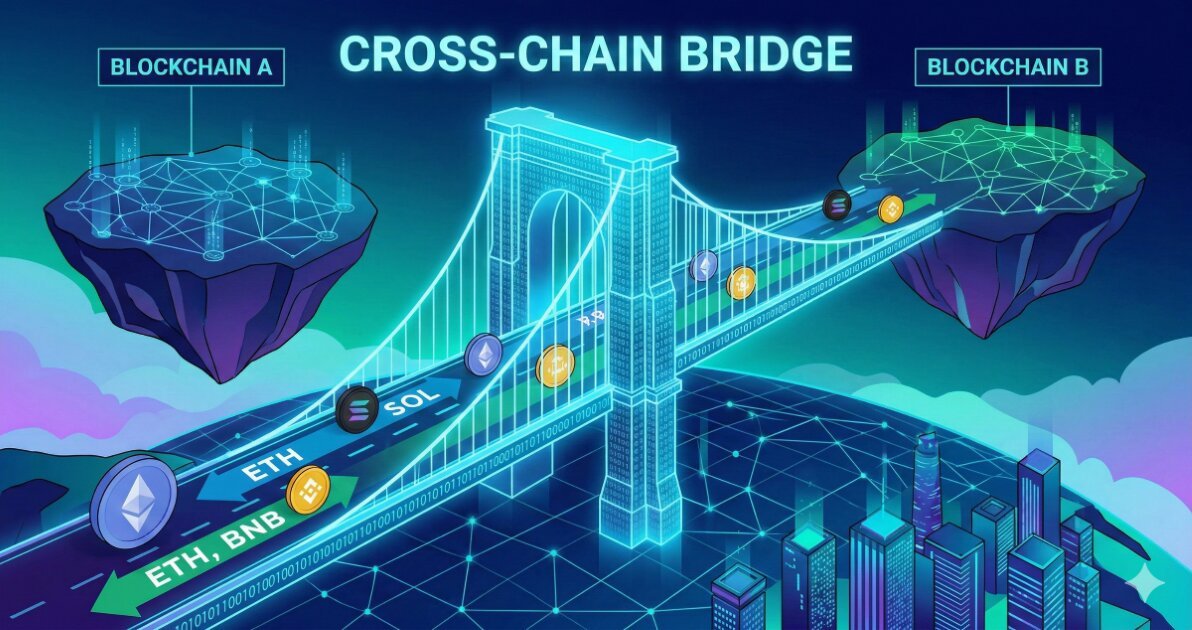
Crypto Exchange vs Crypto Wallet: Custody Models, Execution Paths, and Control Surfaces
Exchanges and wallets represent different architectural approaches to managing digital assets. An exchange combines custody, order matching, and liquidity provision in a single service. A wallet provides key management and transaction signing, often without integrated trading. The distinction matters because it determines who controls private keys, how transactions settle, what counterparty risk you accept, and which regulatory frameworks apply. This article examines the technical and operational boundaries between these tools, the hybrid models that blur them, and the decision points practitioners face when routing assets between custody and execution layers.
Custody and Key Control Models
A centralized exchange holds your private keys. You deposit assets to an address the exchange controls, and the exchange credits your account in its internal ledger. Trades execute as database entries. Withdrawals trigger the exchange’s hot or cold wallet systems to sign and broadcast transactions onchain. You trust the exchange’s operational security, solvency, and withdrawal policies.
A noncustodial wallet stores private keys on your device or in a hardware module you control. You sign transactions locally. The wallet software constructs, signs, and broadcasts transactions to the network without intermediaries. No entity can freeze your funds or deny withdrawals, but you accept full responsibility for key backup and recovery.
Hybrid models exist. Custodial wallets (often provided by exchanges as separate products) hold keys on your behalf but do not offer integrated trading. Some exchanges offer “self custody” modes where keys remain client side but the interface still routes through exchange infrastructure for order placement. Smart contract wallets use onchain logic to enforce access rules, sometimes delegating signing authority to guardians or modules.
The key technical boundary is transaction signing. If you cannot inspect and authorize each transaction signature, you are using a custodial service regardless of branding.
Liquidity Access and Execution Venues
Centralized exchanges maintain order books or automated market making pools within their own systems. When you place a limit order, it sits in the exchange’s matching engine. Fills happen offchain at sub second latency. You see execution against the exchange’s aggregated liquidity, which may include market makers, other retail traders, and institutional flow.
Noncustodial wallets with integrated swap features route orders to onchain or offchain liquidity sources. A wallet might call a DEX aggregator contract that splits your trade across multiple AMM pools to minimize slippage. Execution happens onchain with settlement finality tied to block confirmation times. Gas fees apply per transaction. Some wallets route orders through request for quote systems where professional market makers compete to fill your trade offchain, then settle the result onchain in a single atomic transaction.
The practical difference: centralized exchanges offer tighter spreads for liquid pairs and lower per trade costs for frequent traders, but you must trust the exchange’s reported prices and fills. Onchain execution is verifiable and censorship resistant but exposes you to MEV extraction, front running by validators or searchers, and higher transaction costs during network congestion.
Regulatory and Operational Boundaries
Centralized exchanges typically operate as money services businesses or regulated financial intermediaries. They enforce KYC and AML requirements, restrict access by jurisdiction, and can freeze or reverse transactions under legal compulsion. Withdrawal limits, holding periods, and approval queues are common. The exchange acts as a gatekeeper between fiat rails and crypto assets.
Noncustodial wallets generally do not custody assets, so they often avoid money transmission licensing. Wallet providers may still implement transaction screening (blocking addresses flagged by chain analysis tools) or geo restrictions on their hosted interfaces, but these controls operate at the application layer. You can bypass them by running the wallet software locally, using a different frontend, or interacting directly with the underlying smart contracts.
This boundary is fluid. Regulators in some jurisdictions have argued that wallet providers facilitating swaps or staking are operating unregistered exchanges. DeFi interfaces adding KYC checks or geographic restrictions behave more like centralized platforms. The technical architecture matters less to regulators than the functional role the service plays in the transaction lifecycle.
Worked Example: Moving USDC from Exchange to DeFi Protocol
You hold 10,000 USDC on a centralized exchange. You want to supply it to a lending protocol to earn yield. The exchange does not support direct integrations with that protocol.
-
Initiate a withdrawal. The exchange’s system checks your account balance, applies any holding period or verification requirements, and queues the withdrawal. Processing time ranges from minutes to hours depending on the exchange’s batching policy and hot wallet liquidity.
-
The exchange’s withdrawal system signs a transaction from its hot wallet to your wallet address. The transaction broadcasts to the Ethereum network. You pay a flat withdrawal fee set by the exchange (often 1 to 5 USDC), which may not correspond to actual gas costs.
-
Your noncustodial wallet detects the incoming USDC after one or more block confirmations. You now control the private key securing those tokens.
-
You open the lending protocol’s interface. The interface queries your wallet for token balances using standard RPC calls. You approve the protocol’s smart contract to spend your USDC by signing an ERC20 approval transaction. Gas cost: roughly 46,000 gas.
-
You call the protocol’s supply function. Your wallet constructs the transaction, estimates gas, prompts you to sign. Gas cost: roughly 150,000 to 300,000 gas depending on the protocol’s contract complexity and current state.
-
The protocol mints interest bearing tokens (e.g., cUSDC or aUSDC) to your address. These tokens remain in your wallet, earning yield based on the protocol’s utilization rate. You can withdraw at any time by redeeming them, subject only to the protocol’s liquidity and any programmed restrictions.
Total onchain transactions: three (withdrawal from exchange hot wallet, approval, supply). Total control points: one (your private key). The exchange cannot interfere after step 2. The protocol cannot block your withdrawal if you hold the interest bearing tokens and liquidity exists.
Common Mistakes and Misconfigurations
-
Assuming exchange “wallet” addresses are permanent. Exchanges often rotate deposit addresses or use pooled addresses with memo fields. Sending funds to an old deposit address or omitting a required memo can result in lost or delayed credits. Always generate a fresh deposit address from the exchange interface before each transfer.
-
Ignoring withdrawal whitelisting. Many exchanges require you to preapprove withdrawal addresses and impose a 24 to 48 hour delay before the first withdrawal to a new address. Failing to whitelist your wallet address ahead of time blocks time sensitive transfers.
-
Underestimating gas during network congestion. Wallets estimate gas based on recent blocks. During volatility spikes, base fees can increase 10x within minutes. Setting a static gas limit or using default “fast” settings may result in transactions stuck pending for hours or failing after partial execution.
-
Confusing wallet address and exchange account. Sending tokens directly from another wallet to your exchange deposit address bypasses the exchange’s internal credit system if you use a non standard token or network. If the exchange does not monitor that chain or token contract, your deposit may not be credited automatically.
-
Trusting wallet balance displays without onchain verification. Wallets query RPC endpoints that may serve stale or incorrect data. Before executing large transactions, verify balances and nonces using a block explorer or by querying multiple RPC providers.
-
Reusing nonces or failing to update wallet state. If you sign multiple transactions offchain with the same nonce (e.g., using a hardware wallet with multiple interfaces), only one will confirm. The others will fail. Always let the wallet software manage nonce sequencing unless you are manually constructing transactions.
What to Verify Before You Rely on This
- Current withdrawal fees and processing times for your exchange and chosen network. Some exchanges charge significantly more for ERC20 withdrawals than for native Layer 2 or alternative L1 transfers.
- Whether the exchange supports the specific token and network you need. An exchange may list USDC on Ethereum but not on Arbitrum or Polygon.
- Gas price and network congestion levels. Check a gas tracker and recent block base fees before initiating transactions that require timely confirmation.
- The lending or DeFi protocol’s current contract addresses and supported tokens. Scam sites often mimic legitimate protocol interfaces with altered contract addresses.
- Your wallet’s RPC endpoint configuration. Public endpoints rate limit or serve cached data. Consider using a dedicated RPC provider for production use.
- Whether the exchange has enabled withdrawals for your account and asset. Exchanges periodically pause withdrawals for specific tokens during network upgrades or security incidents.
- The protocol’s liquidity and utilization rate. High utilization may limit your ability to withdraw supplied assets immediately, especially in smaller lending markets.
- Any jurisdiction specific restrictions. Some exchanges block withdrawals to addresses flagged by chain analysis tools or restrict certain token withdrawals based on user location.
- The exact token contract address. Wrapped or bridged versions of tokens (e.g., WETH vs ETH, or bridged USDC vs native USDC) are distinct assets. Sending the wrong version to a protocol that does not support it may lock funds.
Next Steps
- Audit the addresses you control. Export public keys from your noncustodial wallet and verify you can recover the seed phrase. Test small withdrawals from exchanges to confirm you control the destination address.
- Map your transaction flow. Document which assets sit on which exchanges, which wallets you use for each protocol, and what approval or allowance state exists for each token and spender pair.
- Benchmark costs. Calculate the break even point where exchange withdrawal fees plus onchain gas costs exceed the value of moving assets between custody and execution layers. For smaller amounts, keeping funds on exchange may be more efficient despite the custody risk.
Category: Crypto Wallets