Exchange Sand Crypto: Liquidity, Venue Selection, and Execution Mechanics

SAND, the native token of The Sandbox metaverse platform, trades across centralized exchanges, decentralized exchanges, and aggregators. For practitioners, choosing an exchange and structuring orders involves evaluating liquidity depth, fee schedules, custody trade-offs, and slippage profiles. This article examines the technical mechanics of exchanging SAND, common execution pitfalls, and the decision framework for routing trades across venue types.
Venue Types and Liquidity Characteristics
SAND is an ERC-20 token on Ethereum mainnet and a BEP-20 token on Binance Smart Chain. Centralized exchanges typically list both versions but handle chain selection internally. Decentralized exchanges require you to choose the chain explicitly, which determines the liquidity pool you interact with.
Centralized exchanges aggregate liquidity across buyers and sellers into a central order book. Binance, Coinbase, and OKX historically maintain the deepest SAND books by volume, though specific rankings shift. Order book depth matters for large trades: a thin book may execute your order across multiple price levels, producing worse average fills than the midpoint quote suggests.
Decentralized exchanges like Uniswap v3 or PancakeSwap use automated market maker pools. SAND/WETH and SAND/USDC pairs typically offer the highest liquidity on Ethereum mainnet. Pool depth is visible onchain, and you can calculate expected slippage before submitting a transaction. Unlike centralized order books, AMM pools do not require counterparty matching but charge a swap fee (commonly 0.3% to 1%) that stays in the pool as yield for liquidity providers.
Aggregators such as 1inch or Matcha split orders across multiple DEX pools or route through intermediate tokens to minimize slippage. This introduces additional smart contract calls and gas overhead but can yield better net execution for mid-sized trades where single pools lack depth.
Fee Structures and Total Execution Cost
Centralized exchanges charge a maker-taker fee schedule. Maker fees apply when you post a resting limit order that adds liquidity to the book. Taker fees apply when you execute immediately against existing orders. Fee tiers scale inversely with 30 day trading volume: higher volume traders pay lower percentage fees. Verify the current fee schedule for your account tier in the exchange settings, as these rates change and vary by region.
Withdrawal fees for SAND are typically a fixed token amount per transaction, not a percentage. Check the current withdrawal fee before moving tokens offchain, especially if you plan to consolidate small balances. Some exchanges waive withdrawal fees intermittently or offer reduced rates for holding native exchange tokens.
DEX trades incur three cost components: the pool swap fee (embedded in the quoted output amount), Ethereum gas cost for the transaction, and slippage beyond the quoted price if the pool state changes between quote and execution. Gas costs dominate for small trades. A $200 SAND swap might incur $5 to $30 in gas depending on network congestion and transaction complexity. Aggregators multiply gas costs proportionally to the number of hops.
Total execution cost is the difference between the midpoint market price and your net tokens received after all fees. For a $10,000 SAND purchase, a 0.1% centralized exchange fee costs $10. A 0.3% DEX swap fee costs $30, and gas adds another $10 to $50. Compare these against the slippage saved or added by each venue given current liquidity conditions.
Slippage Tolerance and Price Impact
DEX interfaces prompt you to set a slippage tolerance before confirming a swap. This parameter defines the maximum acceptable deviation between the quoted output and the actual execution. If the pool price moves beyond this range (due to other transactions settling first), your transaction reverts.
A 0.5% slippage tolerance on a $5,000 SAND buy allows up to $25 worse execution than quoted. Tight tolerances protect against frontrunning but increase reversion risk during volatile periods. Loose tolerances guarantee execution but expose you to MEV extraction and large adverse price movements.
Price impact measures how much your trade shifts the pool’s marginal rate. A $1,000 swap in a $500,000 liquidity pool typically produces 0.2% to 0.4% impact depending on the pool’s fee tier and liquidity distribution across price ranges (in concentrated liquidity designs like Uniswap v3). Impact compounds: a $10,000 trade is not simply 10x the impact of a $1,000 trade because you move further along the curve.
Centralized order books exhibit price impact through order book depth. A market order walks up the book, filling at progressively worse prices. Limit orders avoid this by resting at your chosen price, but you sacrifice execution certainty and may miss fills if the market moves away.
Custody and Counterparty Risks
Centralized exchanges require depositing SAND into an exchange-controlled wallet. You receive an internal account balance backed by the exchange’s reserves. Withdrawal requires initiating a request, which may be subject to security holds, verification steps, or processing delays. Exchange insolvency, regulatory seizure, or operational failure can freeze your balance indefinitely. Major exchanges maintain proof of reserves, but these attestations do not guarantee real-time solvency or protect against all failure modes.
DEX trades execute directly from your noncustodial wallet. You sign a transaction that atomically swaps tokens within the smart contract. Custody risk shifts to your wallet’s key management and the smart contract’s security. Audited, long-running DEX contracts (Uniswap v2/v3, Curve, PancakeSwap) carry lower smart contract risk than unaudited or recently deployed forks. Check for verified contract code and recent audits before interacting with new pools.
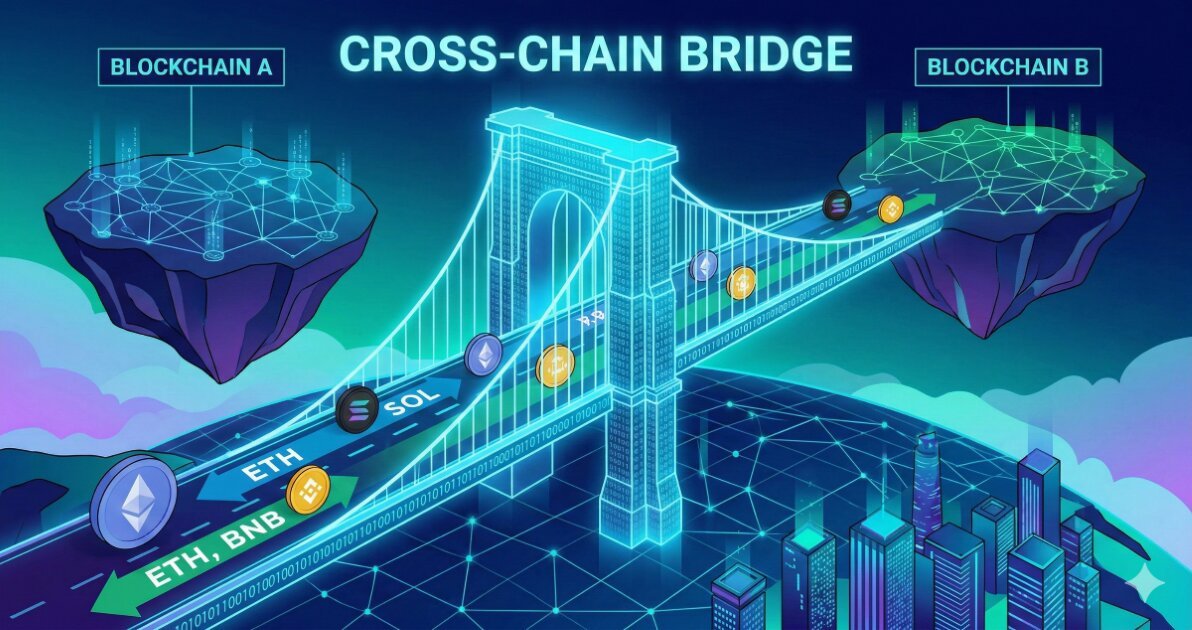
Crosschain bridges introduce additional custody layers. Moving SAND from Ethereum to BSC via a bridge locks tokens on Ethereum and mints wrapped equivalents on BSC. The bridge operator or validator set controls the locked funds. Bridge exploits and validator failures have resulted in permanent loss. Use bridges with established validator sets, large total value locked, and transparent governance if crosschain liquidity offers meaningfully better execution.
Worked Example: Routing a 50,000 SAND Purchase
You hold 35,000 USDC and want to acquire 50,000 SAND. Current market price is approximately 0.70 USDC per SAND, implying a 35,000 USDC trade size.
First, check liquidity. Binance order book shows 80,000 SAND within 0.5% of midpoint, sufficient for low impact. Uniswap v3 SAND/USDC pool on Ethereum holds $1.2 million liquidity, also sufficient. PancakeSwap on BSC shows $400,000 in the SAND/BUSD pool (requiring a USDC-BUSD intermediate swap).
Fee comparison: Binance charges 0.1% taker fee ($35), no withdrawal fee. Uniswap charges 0.3% swap fee ($105), plus approximately $20 gas at 30 gwei. PancakeSwap charges 0.25% swap fee ($87.50) plus dual swap for USDC to BUSD, adding another 0.25% on the first leg and $2 total gas.
Slippage estimate: Binance order book impact is 0.1%. Uniswap pool price impact calculator shows 0.18%. PancakeSwap dual hop shows combined 0.35% impact.
Net execution cost: Binance costs $35 in fees plus $35 in slippage (0.1% of $35,000), totaling $70. Uniswap costs $105 swap fee, $20 gas, $63 slippage, totaling $188. PancakeSwap costs approximately $87.50 first swap, $87.50 second swap, $2 gas, $122.50 slippage, totaling $300.
Choose Binance for this size, as centralized liquidity depth minimizes total cost. For a $500 trade, gas costs would dominate and Binance’s fixed minimum or DEX gas would make the choice size dependent. For a $500,000 trade, splitting between Binance and Uniswap might reduce aggregate slippage.
Common Mistakes and Misconfigurations
- Setting identical slippage across all trade sizes. Large trades need wider tolerances; small trades can use tight tolerances. Adjust per transaction based on pool depth and urgency.
- Ignoring gas price when comparing DEX costs. A $50 gas transaction at 20 gwei becomes $150 at 60 gwei. Check current base fee and priority fee before assuming DEX routes are cheaper.
- Market buying on low liquidity pairs. SAND/BTC or SAND/EUR pairs often have 10x wider spreads than SAND/USDT. Route through major pairs unless you need specific settlement currency.
- Neglecting to verify token contract addresses. Scam tokens with ticker “SAND” appear on DEX aggregators. Always confirm the official contract address from The Sandbox documentation before approving or swapping.
- Using market orders during high volatility. Centralized exchange market orders during rapid price swings can fill 5% to 10% away from the last traded price. Use limit orders or accept wider spreads with limits at your maximum acceptable price.
- Assuming wrapped SAND is fungible across chains. SAND on Ethereum is not directly interchangeable with SAND on BSC or Polygon without bridging. Each chain maintains separate liquidity and pricing.
What to Verify Before You Rely on This
- Current fee tier on your centralized exchange account based on recent 30 day volume.
- Withdrawal fee schedule for SAND on your chosen exchange, as these are adjusted periodically.
- Real-time DEX pool liquidity for your chosen pair using a blockchain explorer or the DEX interface directly.
- Gas price estimates in gwei for Ethereum mainnet or BSC, available from Etherscan or Gas Tracker services.
- Slippage tolerance appropriate for your trade size and current pool depth.
- Official SAND contract address on Ethereum (check The Sandbox docs or Etherscan verification).
- Bridge validator set and TVL if moving SAND crosschain.
- Order book depth at your intended execution size on centralized exchanges.
- Recent security audits and any disclosed vulnerabilities for DEX contracts you plan to use.
- Regional restrictions or withdrawal holds on your centralized exchange account that could delay token access.
Next Steps
- Run parallel quotes across one centralized exchange, one Ethereum DEX, and one aggregator for your intended trade size to establish baseline execution cost.
- Set up API access or use a DEX SDK to automate slippage calculations based on current pool state if you trade frequently.
- Test small trades on each venue type to measure actual execution vs. quoted estimates, accounting for latency between quote and settlement.
Category: Crypto Trading